
Online registration
Open entries without building a website or configuring anything yourself
Take entries through a Google Form and bank transfers and the real work piles up in the back office: checking slips one by one, answering "has my money arrived?" in chat, reconciling totals across several versions of a spreadsheet.
Off-the-shelf systems move the problem to setup. Early-bird pricing with no end date or a cap on the wrong distance is revenue lost, usually noticed after runners have entered. And in the opening minute, when everyone arrives at once, some pay twice, some get stuck and some drop out halfway.
Our team checks your details and configures the whole event before sales open, and you check it matches what you intended. During the opening the team is watching, because we have handled these payment problems thousands of times since 2014.
What this service does for you
- 1
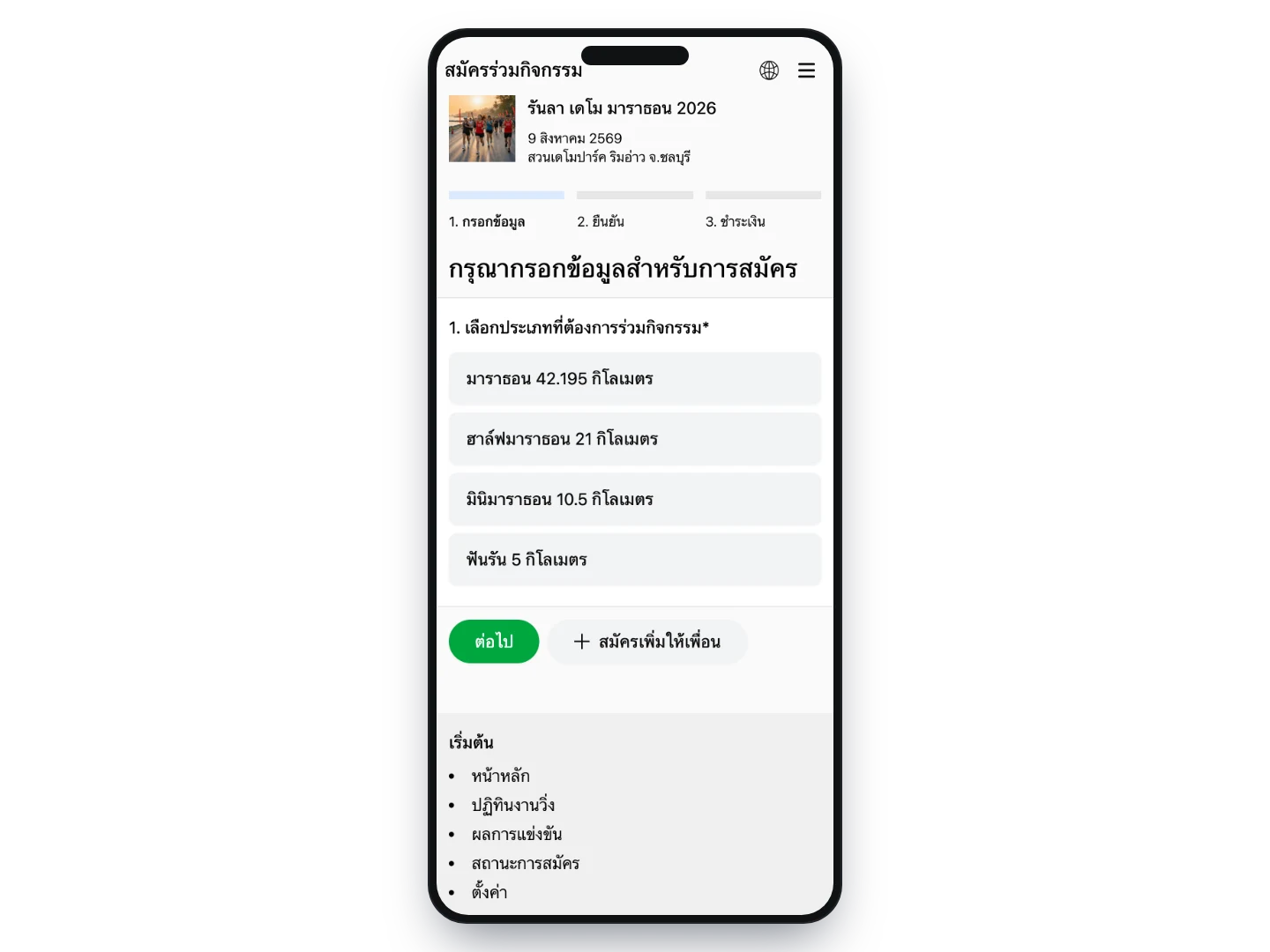
Send us the details and we check them before configuring anything
Distances, prices, sale periods, caps, age groups and what each distance includes — send them over and we check them first for anything that contradicts itself or is missing: early-bird pricing with no end date, overlapping age groups, a distance with no cap on it.
- 2
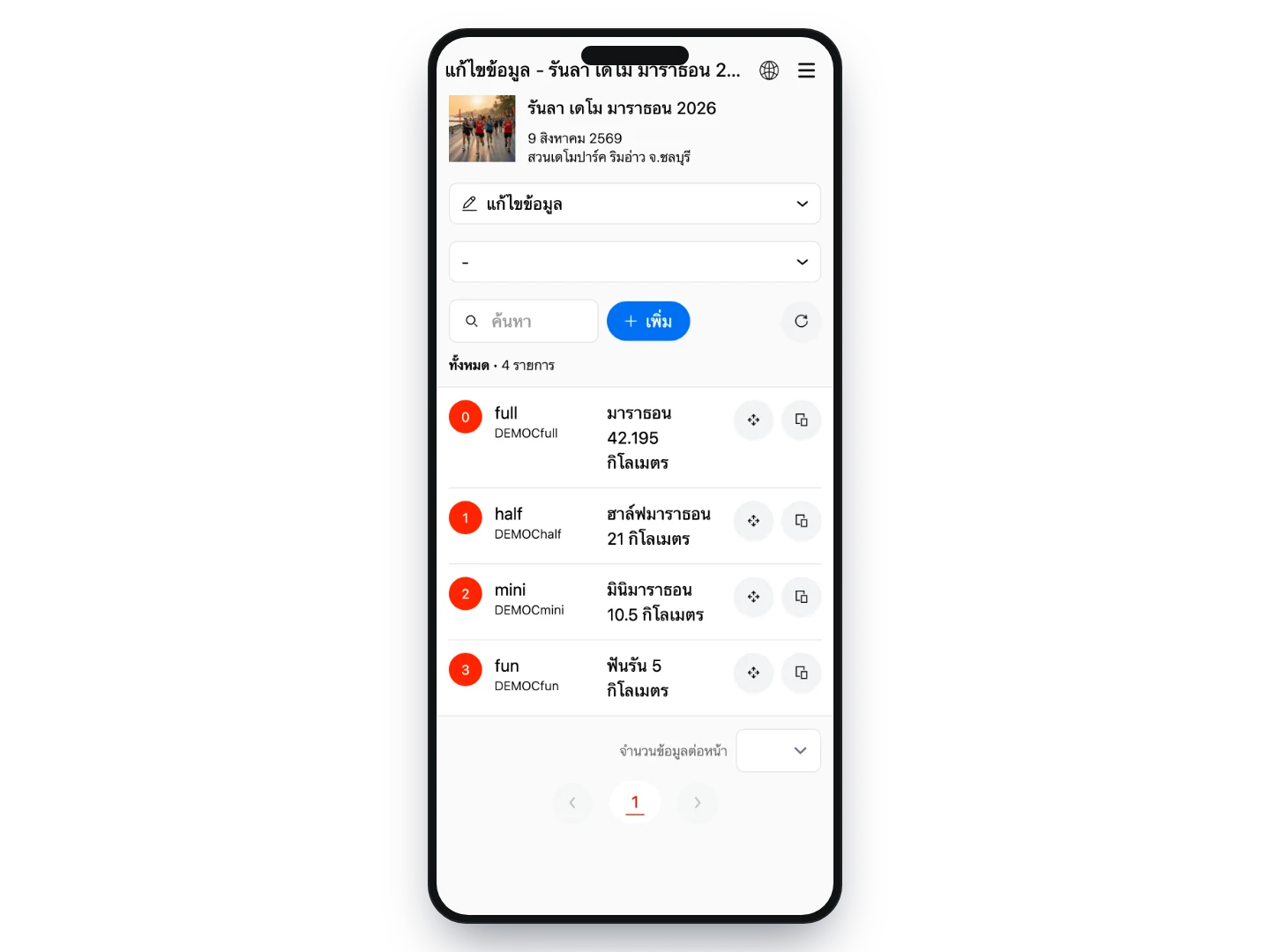
We configure the whole event, then you check it before it goes live
We set up every distance, price tier, cap, solo and team option, add-on and event-specific question, then send you the live screens to review before the on-sale date. You never have to learn the system to open entries, or wonder whether it was set up correctly.
- 3
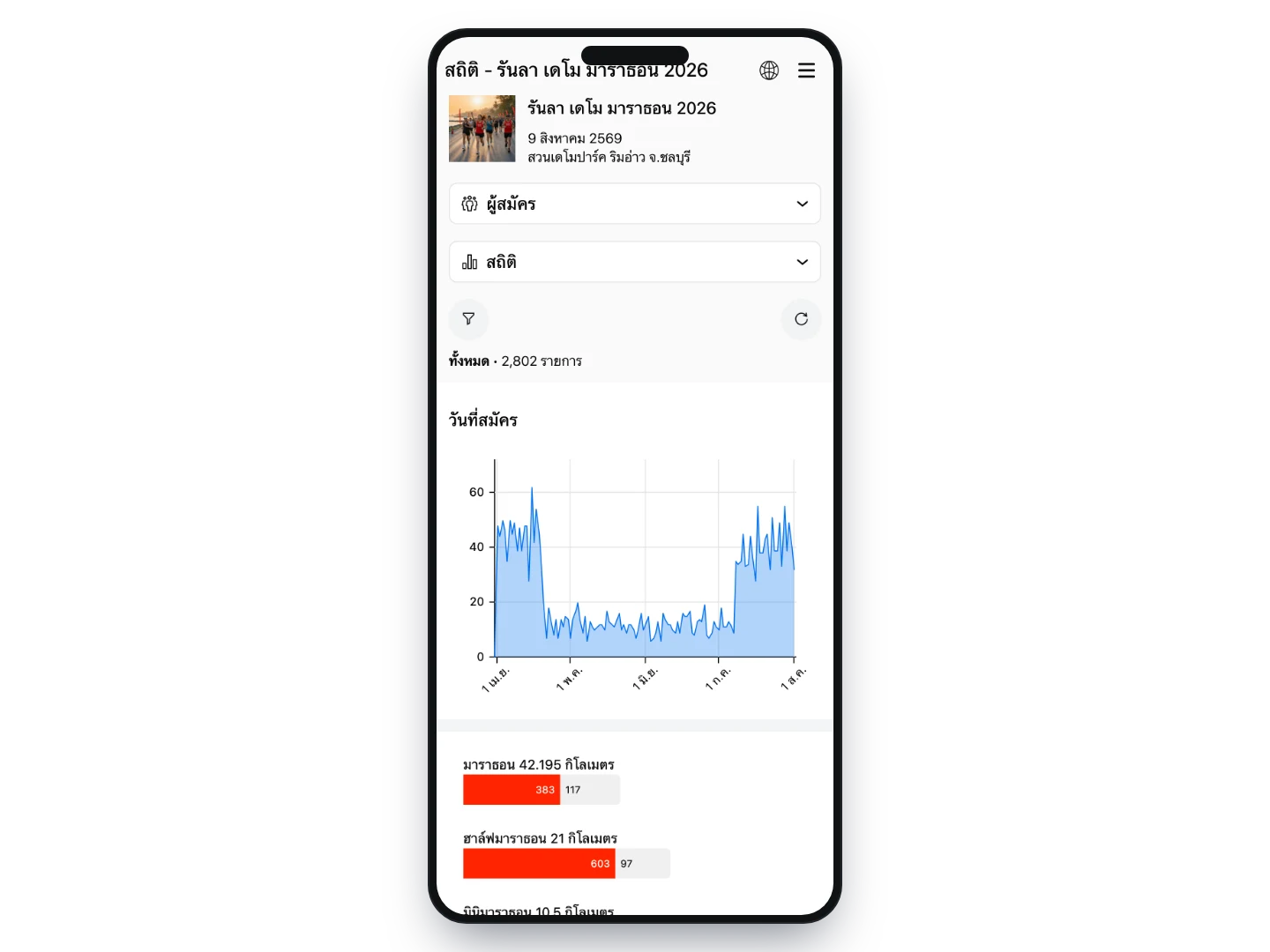
Once entries open, the system carries it
Runners enter and pay themselves and get their own confirmation email; teams and relays are handled on a single entry. Nobody has to answer "has my payment gone through?" in chat, and nobody has to key anything in afterwards. Meanwhile you can see which days entries move and which distances are filling fast or slow — the numbers you need to decide on promotions and how much merchandise to order, while there is still time.
- 4
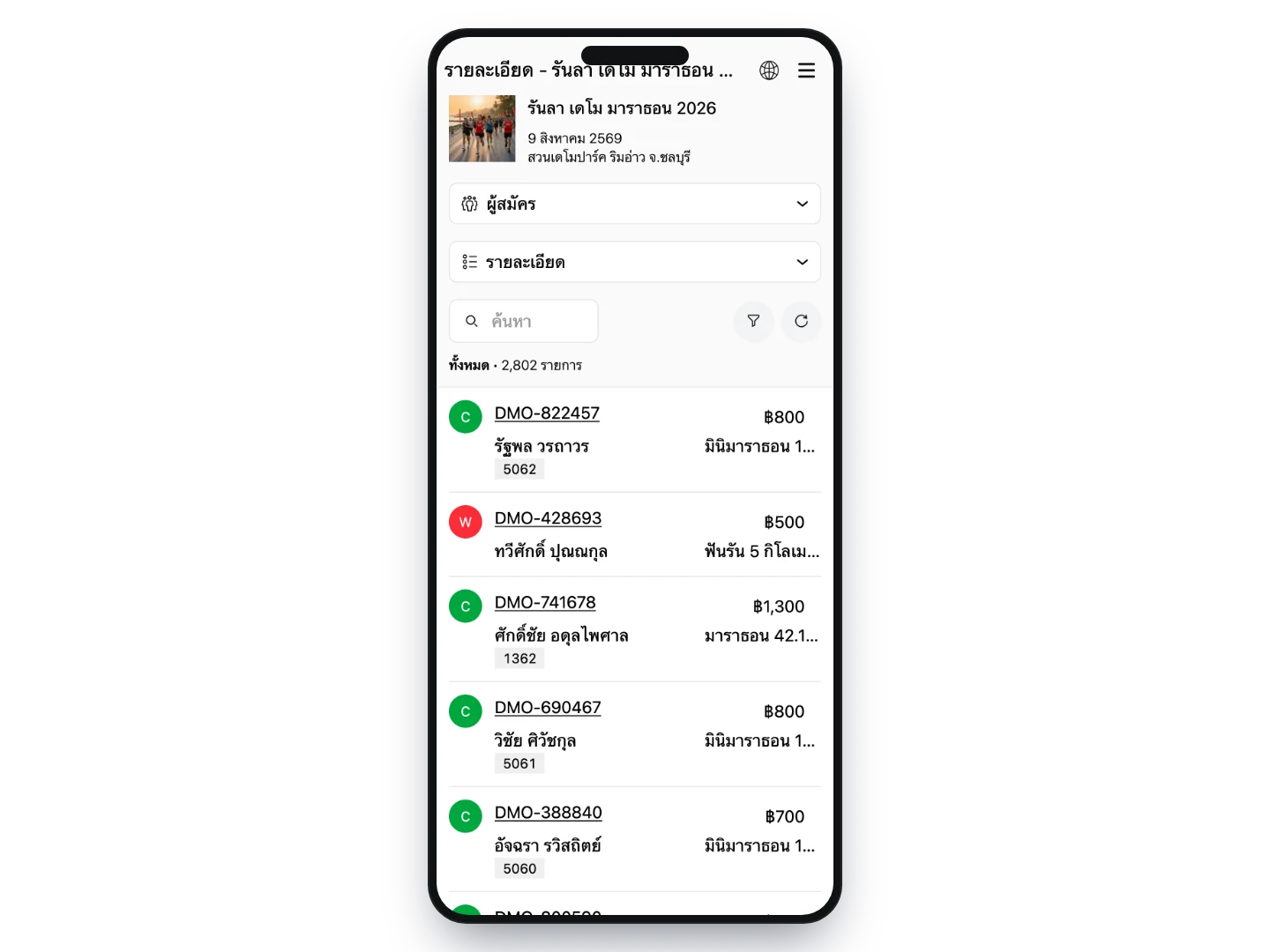
One set of data carries through to race day
The list used for bibs, timing, pack collection and results is the same data the runner entered on day one. Nothing is exported and re-imported, which is where entrant data most often drifts out of sync.
How organizers use it
Sell in tiers, with prices that step up by date
Set the whole price ladder in advance and the system applies the right price based on the day the runner enters. Nobody has to get up at midnight to change prices, and the entry page shows past tiers struck through — which creates urgency without you having to announce anything.
Run a pre-sale before the public opening
Set a window that requires a code to reach the entry form — for last year’s runners, club members, or people holding a reserved place. Everyone else cannot open the form yet, and it gives you a chance to test the whole flow with a small group before the real on-sale date.
Team entries and relays
Set team sizes from 2 to 10 per distance. The captain fills in the whole team on one entry and pays once, so your team never has to work out who belongs to which team across a pile of separate entries.
Age groups that follow your own rules
Set male and female age groups with whatever bands you use, and choose whether age is counted from the year of birth or the exact date. Runners are placed in their group at entry, so nothing has to be re-sorted when results are published or prizes are awarded.
Collect only the event-specific data you will actually use
Add your own questions: shirt size, delivery address, blood type, emergency contact, a photo upload, or tax invoice details. You decide which are required, which distances they apply to, and how long entrants can go back and change them.
Sell add-ons alongside the entry fee
Extra shirts, shuttle buses, accommodation or souvenirs — each with its own price and stock cap. Runners choose them while entering and pay once, so you get both the revenue and the quantities to prepare in the same place.
Separate pricing for international runners
One distance can carry different rates by nationality or country, which suits events with overseas entrants or a local rate. There is no need to duplicate the distance and confuse everyone choosing from the list.
Entry without creating an account first
Runners can complete an entry and pay without signing up, which stops you losing the ones who will not stop to set a password. If they later log in with the same email address, the entry is pulled into their account automatically.
What you can set
- Who configures it
- The RunLah team configures everything before you go on sale, and makes changes for you throughout the sale period on request
- Distances and age groups
- Unlimited distances, each with its own age groups; age counted from year of birth or exact date of birth
- Caps
- Set a maximum per distance, and choose whether that distance closes automatically when it fills
- Pricing
- Unlimited date-based tiers, each able to carry separate rates by nationality or country
- Solo / team
- 1–10 people per entry per distance. Set 1 for solo; anything above that is a team or relay filled in and paid for on one entry
- Event-specific questions
- Text, numbers, single and multiple choice, time, links, image upload, delivery address and tax invoice details
- Add-ons
- Individual pricing and stock caps, restricted to particular distances, and able to appear conditionally based on earlier answers
- Registration windows
- Open to all, code holders only, link holders only, or closed — chained one after another as separate rounds
- Editing entries
- Both runners and your team can edit within the window you set, with a history of who changed what and when
- Languages
- The entry form and confirmation emails are available in both Thai and English on the same event
Frequently asked questions
Wouldn’t it be better to commission our own registration site?
Your own site helps as a shop front, but it comes with no audience — the people who reach it are the ones who already know your event. On the platform, your race sits where 100,000+ visitors a month and a base of 600,000+ registered runners already circulate. The point that gets overlooked is trust: runners who have entered and paid through this same system before decide faster than they do on a payment page they are seeing for the first time.
Will the system hold up when everyone arrives at once on opening day?
The opening minute is the heaviest load of the entire event, and the most expensive moment to get wrong. Working on race entries since 2014, we know where it tends to break: before you go on sale we verify the payment channel and run a real entry end to end, and during the opening the team watches the sale so anything unusual is handled immediately, rather than waiting for you to report it.
If something goes wrong mid-sale — a failed or duplicated payment — who deals with it?
We do. Duplicate payments, money taken with no entry created, sessions abandoned halfway — we have seen these thousands of times since 2014, so there is a repeatable way to find and fix each one. You are not left matching transfer slips against totals, and the runner gets an answer from someone looking at the actual record rather than being told to try again.
Why not just let the organizer configure it?
Because registration settings are tied directly to money. An early-bird end date that is one day out, or a cap left open on a distance that has already filled, is real revenue lost and not always recoverable. So we check and configure every event before it goes on sale, and you review it against what you intended — which takes less of your time and is far harder to get wrong.
If we need a change mid-sale, how long does it take?
Send it over any time and we will make the change the same day, and we can give you edit rights if you would rather do it yourself. The real limits are that price tiers already in the past cannot be changed retroactively, and the tier currently on sale can only have its end date moved — so entries already sold are never re-priced after the fact.
What do we need to have ready before going on sale?
Distances and the price for each tier, how many places per distance, the age groups competing for prizes, what each distance includes, the questions you want to ask entrants, and your payment channel. You can start before all of it is final — we configure what is ready and fill in the rest before the on-sale date.
If an entrant fills something in wrongly, can it be corrected later?
Yes, by the runner or by your team, within the window you set. The system keeps a history of who changed what and when, so it can be checked later without relying on anyone’s memory.
Who owns the entrant data?
The data belongs to the organizer. You can download it whenever you like, in a format that is ready to work with. RunLah stores and processes it as your service provider, nothing more.
Related services
Add-ons & event-specific questions
Ask any question your event needs, from shirt size to delivery address, and sell extra shirts, accommodation or shuttle seats with their own prices and stock caps — all paid for in one go with the entry fee.
Online payments
Accept PromptPay, credit cards and bank transfers — and transfers carry no added service fee. Our team checks the transfer slips and confirms entries, and your sales, fees and net balance sit in one place.
Promotions & discount codes
Set up discount codes, early-bird pricing or group rates, then see exactly how much of each code was used — so you can move sign-ups when you need to, on your terms.