Race pack collection
Through the collection desk in as little as 15 seconds per runner
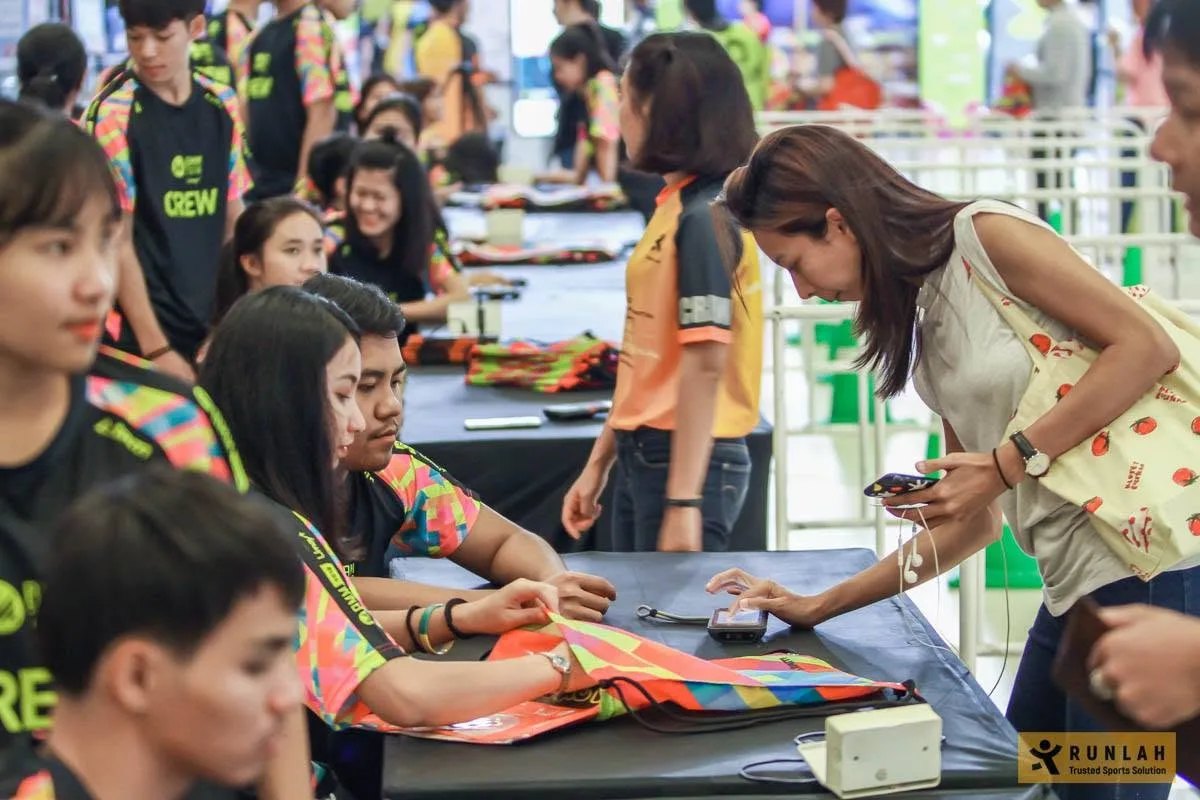
The pack collection queue is where organizers get the most complaints. Everyone arrives in the morning, while staff still search paper lists or type names into Excel one runner at a time.
The real cause is the time per runner at the desk, not the number of lanes, so opening more lanes only adds staff, tables and space. Worse than a long queue is handing out the wrong size or a second pack from another lane, discovered when stock runs out before people do.
Our system has been refined across more than 200 live events, down to as little as 15 seconds per runner at the desk. You can run fewer lanes without a longer queue, and every lane sees who has already collected.
What this service does for you
- 1
Find the runner instantly, with no signal needed
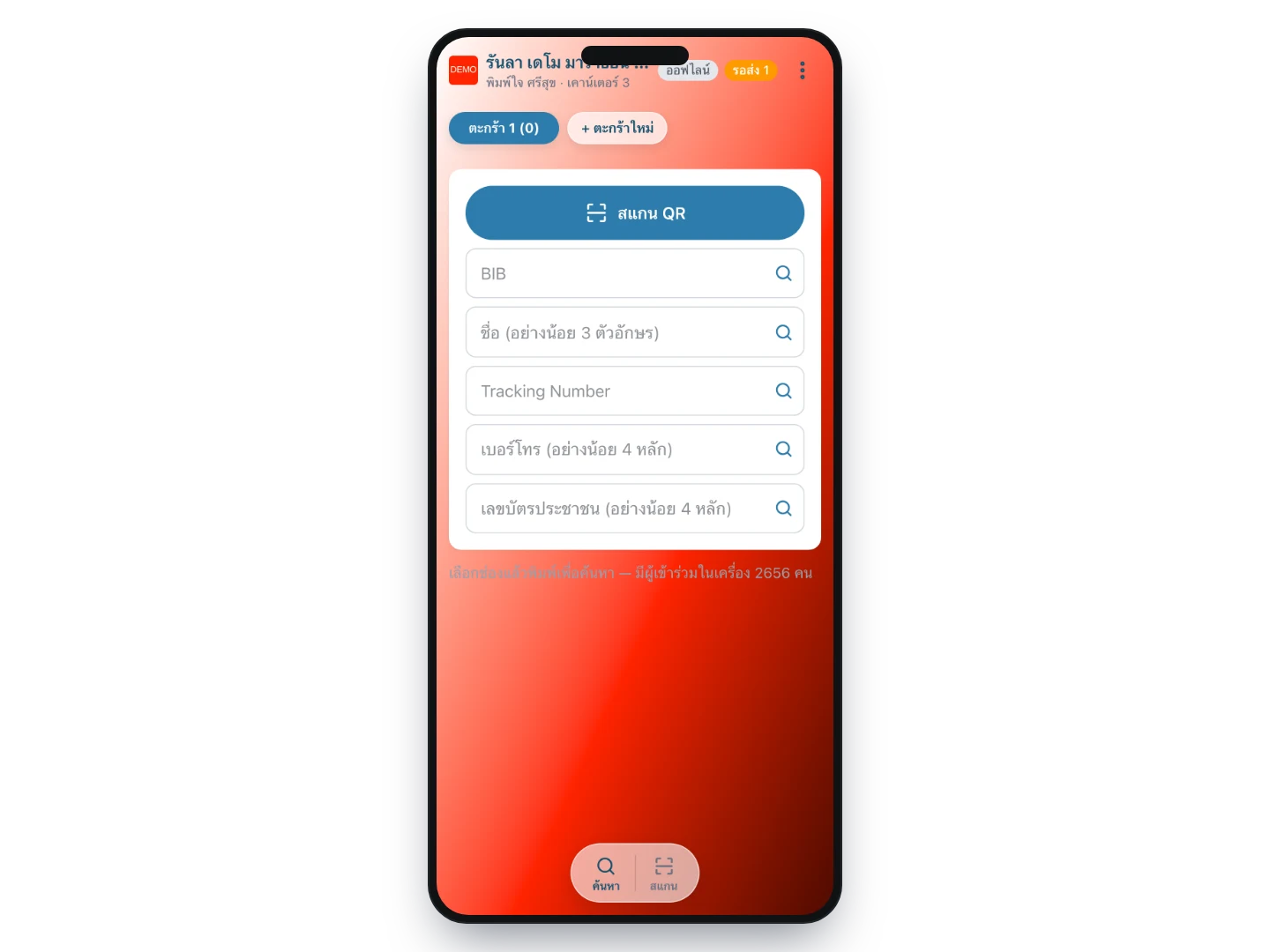
The whole entrant list is on the device before the desk opens, so staff can search immediately without waiting on the internet. Scan the QR on the entry, or type a bib number, name, phone number or ID number — any of them finds the same person.
- 2
Hand it over and record it at the desk
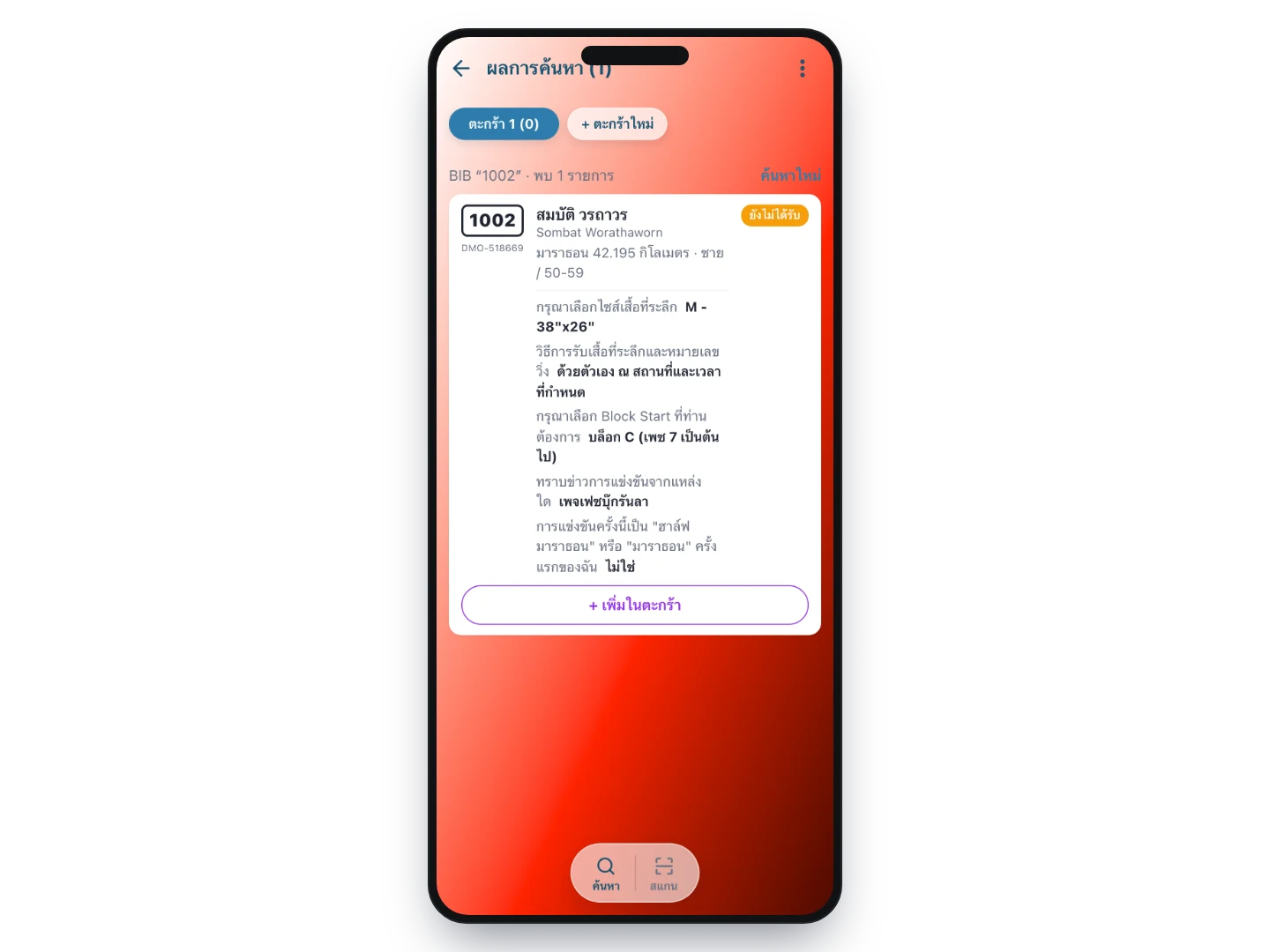
The screen shows what this runner is due — shirt size and any extras they bought. Staff pick them, record the handover, and the system keeps who collected what and when. If the same person comes back, the device says so straight away.
- 3
Groups are done in one queue
Several people can be combined into one collection and handed over together, with a total of how many of each size to pick, and the name and phone number of whoever collected on their behalf recorded every time.
- 4
Live totals through the day
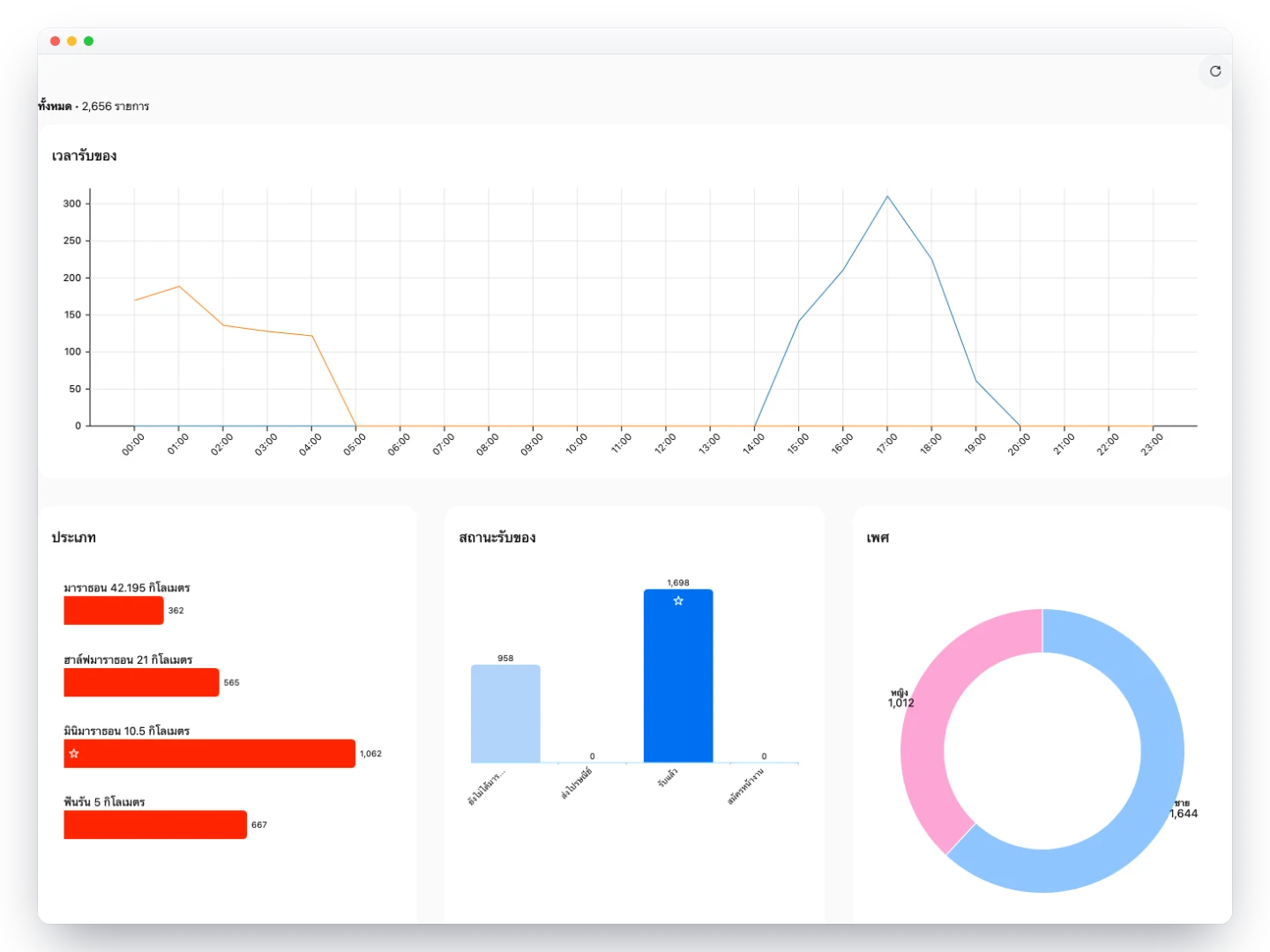
You can see how many have collected, how many are left, and when the busiest periods are — so staff can be moved to reinforce a desk while it still matters.
How organizers use it
Fewer lanes without a longer queue
Once the time per runner is measured in seconds, a single lane gets through far more people. Events that used to open many lanes can open fewer without the queue growing — and the costs that come with lanes, from staff to marquee hire to the floor space the queue needs, come down with them.
A volunteer who arrived that morning can run it
Everything happens on one screen — search, add to the collection, hand over — so there is nothing to train in advance and no rules to memorise about who gets what, because the screen shows it. Anyone who has already collected is flagged, so staff are not left carrying a decision that is easy to get wrong.
No double collection across lanes
Every device sees the same status, so someone who collected at lane 1 and walks to lane 5 still shows as collected — unlike separate printed lists per lane, where you find out when the stock runs out early.
Mistakes can be reversed, not guessed at later
A wrong handover can be reversed with a reason attached, and every handover records who did it, at which lane, and when. When something has to be checked afterwards, you look it up rather than asking people one by one.
Move staff while the day is still running
Live collection totals by distance and by hour show which periods are busiest and how many runners are still to come, which is what you need to move staff to another desk or close an idle lane the same morning.
Your own team, on their own devices
It runs as an Android app or in a mobile browser on the phones and tablets your team already carries, so there is no specialist scanning hardware to buy.
What you can set
- Finding a runner at the desk
- Scan the QR on the entry · bib number · name · phone number · ID number
- Collecting on behalf of others
- Combine several people into one collection and hand over together, with totals per size and add-on, and the collector’s name and phone recorded every time
- Multiple lanes
- Any number of devices at once, each set to its own staff name and lane number, all seeing the same collection status
- Held collections
- Up to five collections can be held open at once and switched between while someone fetches their friends, and nothing is lost if the app is closed midway
- When the connection drops
- Search and handover keep working from the data on the device; completed handovers are stored and sent up automatically when the signal returns. While online, the device refreshes every 60 seconds to prevent double collection across lanes
- Per-runner status
- Not collected · posted · collected, with handovers reversible when a reason is given
- History kept
- Every handover records the time, staff name, lane number, collector and every bib in that collection, filterable by staff member or by lane
- Equipment needed
- An Android phone (the RunLah Pack app) or a browser on a phone or tablet — no specialist scanner required
- Pairing devices
- Scan a QR issued by the team per event; access can be revoked the moment the event ends, after which the data on that device is wiped automatically
Frequently asked questions
What does the 15 seconds actually cover?
From the runner presenting a QR or giving a bib number to the staff member completing the handover. It is the best time achieved in practice, not an average across the whole event. What slows it down is usually not the system but how the stock is laid out behind the desk, how many items each runner is due, and people who cannot find their entry on their phone when they reach the front.
How many lanes do we need?
It depends on the number of runners and the hours you are open, so there is no fixed answer. Tell us your entry numbers and collection window and we will estimate it beforehand from comparable events — and on the day you can watch the live figures and adjust.
Could we just use Excel on the computers we already have?
You can, but three things tend to bite on the day. You need a computer at every lane; each machine holds its own file, so the record of who collected is split and someone can collect again at another lane; and searching is only as fast as whoever is typing. This system uses phones your team already has, scans a QR instead of typing, and keeps every device on the same status.
If the venue internet is down all morning, can we still hand out packs?
Yes, exactly as normal. The device keeps working and stores each handover locally, then sends them up when the signal returns — nobody has to key anything in afterwards.
Can we run the collection ourselves without your team on site?
Yes, using the browser version. Your staff open it on their own phones — nothing to install and no special equipment.
Can a runner collect on behalf of a friend?
Yes, and it is normal at events where people come in groups. Staff combine everyone into one collection and hand it over together, and the system records the collector’s name and phone number, so if a question comes up later you can see who the pack went out with.
What if a pack is handed to the wrong person?
Reverse that handover with a reason attached and the status returns to not collected. Both the original handover and the reversal stay in the history — nothing is deleted.
Related services
RFID timing
RFID chip timing at every point from start to finish, run end to end by RunLah’s own timing crew. Results appear the moment a runner crosses the line, finish-line video is there to re-check a close call, and every recorded time has a per-read record you can open when someone asks.
Chip check
A verification point after pack collection: tap the bib on the reader and the runner’s name, distance and age group appear on a large screen for them to check themselves. Anything wrong is corrected on the spot — and it is a screen runners want to be photographed next to.